Creamy Mango Yogurt Smoothie
Ingredients
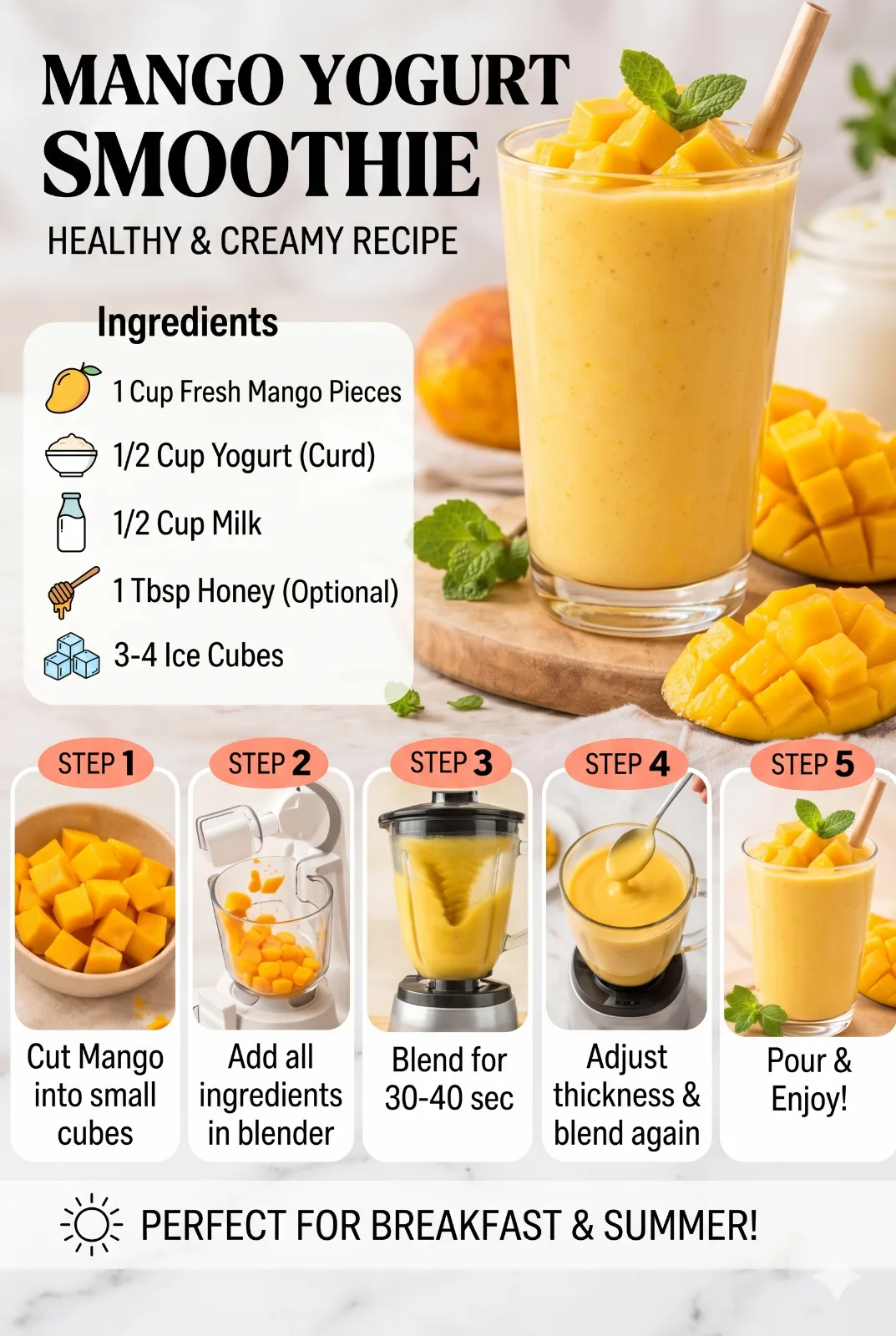
- 1 cup fresh mango pieces
- 1/2 cup yogurt (curd)
- 1/2 cup milk
- 1 tbsp honey (optional)
- 3-4 ice cubes
Instructions
- Cut mango into small cubes.
- Add all ingredients in blender.
- Blend for 30-40 seconds.
- Adjust thickness and blend again if needed.
- Pour and enjoy!
Nutritional Deep Dive & Health Benefits
Let's talk about what's actually in this beautiful yellow-orange glass of goodness. First up, mangoes—they're not just delicious; they're a nutritional powerhouse. One cup of mango provides over 60% of your daily vitamin C, which is essential for immune function and glowing skin. Mangoes also contain vitamin A, which supports vision and eye health, and dietary fiber, which aids digestion and keeps you feeling full. The natural sugars in mango give you a quick energy boost without the crash you get from processed sweets.
Now, yogurt—especially if you use plain, unsweetened yogurt—brings a host of probiotics to the party. These beneficial bacteria support gut health, which in turn can improve digestion, boost immunity, and even enhance mood. Yogurt is also a great source of calcium and protein. Calcium builds strong bones and teeth, while protein helps repair muscles and keeps you satisfied. When you blend yogurt with milk, you're doubling down on calcium and protein, making this smoothie a well-rounded nutritional package.
The milk in this recipe adds creaminess and additional protein, plus it's often fortified with vitamin D, which helps your body absorb calcium. If you're lactose intolerant, you can easily swap in almond, soy, or oat milk—each brings its own unique benefits. Almond milk is low in calories, soy milk is high in protein, and oat milk is creamy and rich in fiber.
Honey is optional, but if you include it, you're adding natural sweetness along with trace amounts of antioxidants and antibacterial properties. However, if you're watching your sugar intake, you can skip it entirely—ripe mangoes are sweet enough on their own.
Finally, those ice cubes? They're not just for chilling—they help create that thick, frosty texture we all love in a smoothie. Plus, staying hydrated is crucial for overall health, and this smoothie contributes to your daily fluid intake.
All in all, this Mango Yogurt Smoothie is a balanced blend of carbohydrates, protein, and healthy fats (if you add a bit of nut butter or seeds). It's perfect for breakfast because it provides sustained energy, or as a post-workout snack to help muscle recovery. And because it's naturally sweet and creamy, it satisfies cravings without any guilt.
Tips and Variations
One of the best things about this smoothie is how adaptable it is. Here are some of my favorite tips and variations to make it your own:
- **Frozen mango magic:** If you have frozen mango chunks, use them instead of fresh mango and ice cubes. This makes the smoothie extra thick and frosty without watering it down. Just adjust the liquid accordingly.
- **Yogurt options:** Greek yogurt will make your smoothie even creamier and add more protein. If you want a dairy-free version, coconut yogurt is a fantastic choice—it adds a subtle tropical flavor that complements the mango beautifully.
- **Milk alternatives:** As mentioned, any milk works. For a richer smoothie, try full-fat coconut milk (the canned kind) for a decadent treat. For a lighter version, use unsweetened almond milk.
- **Sweetener swap:** Instead of honey, try maple syrup, agave nectar, or a couple of pitted dates. Dates also add fiber and a caramel-like sweetness.
- **Add-ins for extra nutrition:** A handful of spinach will turn your smoothie green but won't affect the taste much—it's a great way to sneak in veggies. A tablespoon of chia seeds or flaxseeds adds omega-3s and fiber. A scoop of protein powder makes it a true meal replacement.
- **Spice it up:** A pinch of cardamom or cinnamon adds warmth and complexity. Fresh ginger gives it a zingy kick and aids digestion.
- **Tropical twist:** Add a few chunks of pineapple or a splash of coconut water for an even more tropical vibe.
- **Make it a bowl:** Pour the smoothie into a bowl and top with granola, sliced banana, and coconut flakes for a satisfying smoothie bowl.
- **Meal prep:** Portion out the mango and other ingredients (except liquids) into freezer bags. When you're ready, just dump a bag into the blender with yogurt and milk—breakfast is ready in seconds.
- **Adjusting thickness:** If you like a thinner smoothie, add more milk. For a thicker consistency, use less milk or add more frozen fruit.
Remember, the key to a perfect smoothie is balancing flavors and textures. Taste as you go and adjust to your liking. Don't be afraid to experiment—that's how you discover your signature blend!
FAQ
Can I use frozen mango instead of fresh?
Absolutely! Frozen mango works wonderfully and gives the smoothie a thicker, frostier texture. If you use frozen mango, you can omit the ice cubes. You might need to add a little extra milk to get the blender going, but start with the recipe amount and add more if needed.
Is this Mango Yogurt Smoothie healthy?
Yes, it's packed with nutrients. Mangoes provide vitamins A and C, yogurt adds probiotics and protein, and milk contributes calcium and protein. If you're concerned about sugar, you can skip the honey and use unsweetened yogurt and milk. Overall, it's a wholesome choice for breakfast or a snack.
Can I make this smoothie vegan?
Certainly! Use a plant-based yogurt (like coconut, almond, or soy) and plant-based milk (almond, soy, oat, etc.). Instead of honey, use maple syrup or agave nectar. The result is just as creamy and delicious.
How do I make it thicker?
To thicken your smoothie, reduce the amount of milk, add more frozen fruit, or include a tablespoon of chia seeds or oats. Greek yogurt also adds thickness. Blend and check consistency, adding more solids as needed.
Can I prepare this smoothie ahead of time?
It's best enjoyed fresh, but you can prep the ingredients ahead. Chop the mango and store it in the fridge for up to 3 days, or freeze it for longer. You can also blend the smoothie and store it in an airtight container in the fridge for up to 24 hours. Just give it a good stir or shake before drinking.
Expert Blending Techniques & Equipment Guide
Getting that velvety, lump-free texture isn't just about tossing everything in and hoping for the best—it's about technique. First, always add your liquids to the blender before the solids. This means pouring in the milk and yogurt first, then adding the mango and ice on top. Why? Because the blades need liquid at the bottom to create a vortex that pulls everything down. If you dump the mango in first, you'll end up with a frustrating air pocket and chunks of fruit spinning around untouched.
Second, if you're using fresh mango, freeze it for at least 30 minutes beforehand. This small step eliminates the need for ice, which can water down your smoothie, and gives you that thick, milkshake-like consistency. If you're short on time, just use frozen mango chunks—they're a game-changer. And speaking of ice, if you do use it, crush it slightly before blending or use a blender with a powerful motor. A high-speed blender like a Vitamix or Ninja will pulverize ice in seconds, while a standard blender might leave gritty shards.
Third, blend in pulses. Start with a few short pulses to break up the fruit, then switch to a continuous blend for 30-40 seconds. This prevents overheating the motor and ensures an even blend. If your blender has a smoothie setting, use it—it's designed for this exact purpose. If not, just blend until you see a smooth, swirling vortex with no visible chunks.
Finally, don't over-blend. Blending for too long introduces air, making the smoothie frothy and thin. Stop as soon as it's smooth. And if you're using a bullet-style blender, you may need to shake it a few times to dislodge stuck fruit. A rubber spatula can help scrape down the sides between pulses.
As for equipment, you don't need a top-of-the-line blender, but a decent one makes a difference. Look for a blender with at least 600 watts of power and a sturdy jar. Personal blenders are great for single servings, while full-size blenders handle larger batches. If you're serious about smoothies, consider investing in a high-speed model—it'll pay for itself in silky results. And always rinse your blender right after use; dried mango is a pain to clean!
Storage, Meal Prep & Serving Suggestions
This Mango Yogurt Smoothie is best enjoyed fresh, but life gets busy, and sometimes you need to plan ahead. The good news is that you can prep almost everything in advance. Chop your mango and store it in an airtight container in the fridge for up to three days. For longer storage, freeze the chunks on a baking sheet, then transfer to a freezer bag—they'll keep for up to six months. When you're ready, just toss the frozen mango into the blender with the rest of the ingredients. No ice needed!
If you want to make the smoothie itself ahead of time, pour it into a mason jar, filling it to the top to minimize air exposure. Seal it tightly and refrigerate for up to 24 hours. Before drinking, give it a good shake or stir—separation is natural, especially if you used fresh fruit. For an even longer shelf life, you can freeze the smoothie in ice cube trays. Once frozen, pop the cubes into a freezer bag, and when you want a smoothie, blend a handful of cubes with a splash of milk. It's like instant smoothie magic.
When it comes to serving, this smoothie is versatile. Pour it into a tall glass with a fun straw for a kid-friendly treat. For a more elegant presentation, serve it in a wine glass with a mint sprig and a few mango slices on the rim. If you're hosting brunch, set up a smoothie bar with toppings like granola, coconut flakes, chia seeds, and fresh berries. Guests can customize their own bowls.
And don't limit yourself to breakfast—this smoothie makes a great afternoon snack, post-workout recovery drink, or even a light dessert. Pair it with a handful of nuts for a balanced snack, or enjoy it alongside a salad for a refreshing lunch. The creamy texture and tropical flavor make it a crowd-pleaser for all ages. Just remember, if you're serving it to guests, double or triple the recipe—it disappears fast!
Additional Frequently Asked Questions
Can I use mango pulp instead of fresh mango?
Yes, you can! Canned or frozen mango pulp works in a pinch, but be mindful of added sugars. Look for unsweetened pulp if possible. The texture will be slightly different—more like a puree—but still delicious. Use about 1 cup of pulp to replace the fresh mango.
What type of yogurt is best for this smoothie?
Plain, unsweetened yogurt is ideal because it lets the natural sweetness of the mango shine. Greek yogurt adds extra creaminess and protein, while regular yogurt is a bit thinner. If you want a tangier flavor, try skyr or kefir. Coconut yogurt is a great dairy-free option. Avoid flavored yogurts, which can be loaded with sugar and artificial ingredients.
Can I add protein powder to this smoothie?
Absolutely! A scoop of vanilla or unflavored protein powder turns this into a satisfying post-workout shake. Whey, plant-based, or collagen peptides all work well. If you use protein powder, you might want to skip the honey since many powders are already sweetened. Start with half a scoop and adjust to taste.
Is this smoothie good for weight loss?
It can be, depending on your ingredients. Using unsweetened almond milk, non-fat Greek yogurt, and skipping the honey keeps the calories low while still providing protein and fiber to keep you full. Mango is higher in sugar than some fruits, so portion control matters. One serving of this smoothie (about 1 cup) is a reasonable snack or light meal. For a lower-sugar option, swap half the mango for frozen cauliflower or spinach—you won't taste the veggies!
Why is my smoothie not creamy?
If your smoothie turns out thin or watery, it's usually due to too much liquid or not enough frozen fruit. Next time, reduce the milk by a quarter cup, add more frozen mango, or include a tablespoon of Greek yogurt or nut butter. Also, make sure you're using ripe, sweet mangoes—underripe fruit can be fibrous and less creamy. And always blend long enough to fully puree the fruit; a few extra seconds can make a big difference in texture.