High-Protein Matcha Green Smoothie
Expert Blending Techniques & Equipment Guide
Getting that velvety, lump-free texture doesn't happen by accident—it's all about technique and the right tools. If you've ever ended up with gritty matcha clumps or chalky protein pockets, you know the struggle. Here's how to nail it every time.
First, the order of ingredients matters more than you'd think. Always add liquids first, then soft ingredients like yogurt and banana, then powders, and finally ice or frozen items on top. This prevents dry powder from sticking to the bottom of the blender and gives the blades a smooth base to work with. If your blender has a tamper, use it to push ingredients down rather than stopping and scraping constantly.
Matcha is notoriously clumpy because it's a fine powder that loves to cling to itself. The pro move is to sift it through a small mesh strainer before it hits the blender, or whisk it with a splash of warm water to form a smooth paste first. That little extra step makes a huge difference in texture—no more grassy pockets ruining an otherwise creamy sip.
For equipment, a high-speed blender like a Vitamix or Ninja is ideal, but you can absolutely make this in a standard blender. If your blender is on the weaker side, blend in two stages: first the liquids, yogurt, and powders, then add frozen items and blend again. You can also soak your frozen banana for a minute in warm water to soften it slightly before blending.
Don't overlook the power of a good blender cup or personal blender for single servings. They're convenient and often come with travel lids, making this smoothie a grab-and-go dream. Just be sure to blend long enough—at least 45 seconds on high—to fully break down the spinach and frozen fruit. If you're using a food processor, it can work in a pinch, but you may need to scrape down the sides more often.
Lastly, temperature matters. Using frozen ingredients keeps the smoothie cold and thick without diluting the flavor with ice. If you prefer a warmer drink (yes, some people do!), use room-temperature milk and skip the ice—it'll be more like a matcha latte smoothie. Either way, the goal is a smooth, sippable consistency that feels indulgent but is secretly packed with good stuff.
Ingredients
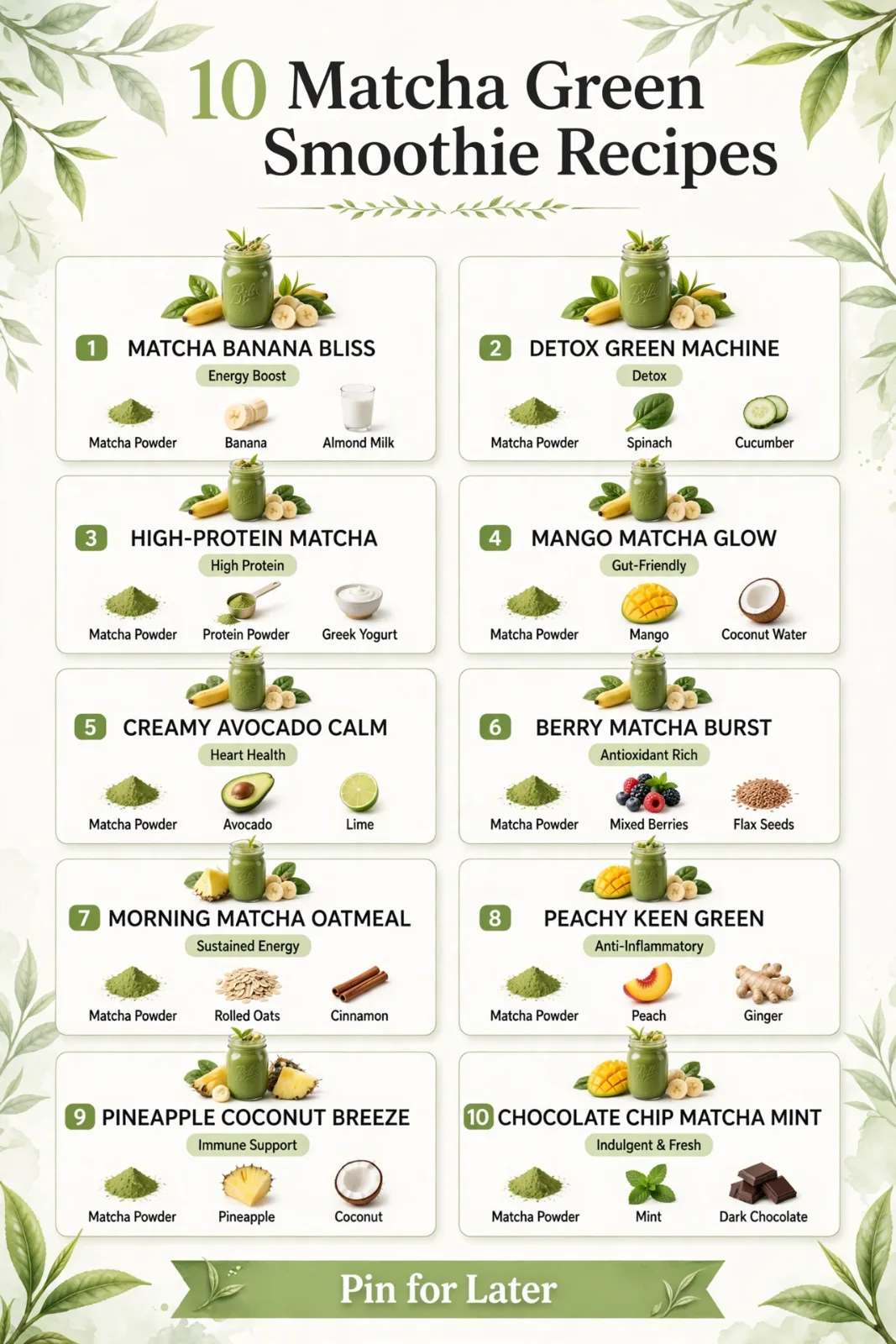
- 1-2 teaspoons matcha powder
- 1 scoop protein powder (vanilla or unflavored)
- 1/2 cup Greek yogurt
- 1/2 cup unsweetened almond milk or milk of choice
- 1/2 frozen banana (optional, for sweetness)
- 1 handful fresh spinach (optional, for extra greens)
- Ice cubes (optional, for thickness)
Instructions
- Add 1-2 teaspoons of matcha powder to the blender.
- Add 1 scoop of protein powder of choice.
- Add 1/2 cup of Greek yogurt.
- Pour in 1/2 cup of almond milk (or milk of choice).
- If using, add 1/2 frozen banana, a handful of spinach, and a few ice cubes.
- Blend on high until completely smooth and creamy, about 30-60 seconds.
- Pour into a glass and enjoy immediately.
Storage, Meal Prep & Serving Suggestions
Let's be real: mornings are chaotic, and sometimes you don't have time to pull out the blender and measure everything. That's where a little meal prep magic comes in. While this smoothie is best fresh, you can absolutely set yourself up for success with a few smart strategies.
The easiest approach is to portion out the dry ingredients ahead of time. Grab small zip-top bags or reusable containers and add your matcha and protein powder together. You can even add a pinch of cinnamon or a few chia seeds if you like. Label them with the date and keep them in your pantry. In the morning, just dump one pack into the blender with yogurt and milk—done in under two minutes.
If you want to go a step further, make freezer smoothie packs. Add the matcha, protein powder, frozen banana, and spinach to a freezer bag or jar. When you're ready, tip the whole thing into the blender, add Greek yogurt and almond milk, and blend. These packs last up to three months in the freezer, so you can batch several at once.
Can you store the blended smoothie? Yes, but with caveats. Pour it into a mason jar, fill it to the very top to minimize air exposure, and seal tightly. It'll keep in the fridge for up to 24 hours. The color will fade a bit and it may separate—just shake or stir before drinking. For a grab-and-go option, blend it the night before and keep it in a thermos or insulated bottle. It won't be as thick, but it's still delicious.
Serving-wise, this smoothie shines in a tall glass with a sprinkle of matcha on top for a café-worthy look. You can also pour it into a bowl and top with sliced banana, coconut flakes, hemp seeds, or a drizzle of almond butter. It's a great base for a smoothie bowl because it's thick and holds toppings well. If you're serving it to guests, add a dollop of whipped coconut cream for a fancy touch.
For kids or those who prefer a milder matcha flavor, serve it in a smaller glass with a fun straw. You can also freeze leftovers into popsicles for a protein-packed summer treat. Just pour into molds and freeze for a few hours—healthy snacking sorted.
Additional Frequently Asked Questions
Can I use fresh spinach instead of frozen?
Absolutely. Fresh spinach works great and blends easily in a high-speed blender. If your blender is less powerful, you might want to blend the spinach with the liquid first to ensure it's fully broken down before adding the rest. Frozen spinach is a convenient alternative and makes the smoothie colder and thicker, but fresh is perfect if you have it on hand. Just remember that a handful of fresh spinach wilts down to almost nothing, so don't be shy—add a generous cup if you want a bigger nutritional boost.
Is this smoothie keto-friendly?
It can be! To make it keto, use unsweetened almond milk, skip the banana, and choose a low-carb protein powder (like whey isolate or a keto-specific blend). Greek yogurt is relatively low in carbs, but you can swap it for full-fat plain yogurt or even cottage cheese for fewer carbs. Add a tablespoon of MCT oil or coconut oil for healthy fats. The matcha itself is virtually carb-free, so the main carb sources are the yogurt and any added fruit. With those swaps, you'll have a creamy, high-fat, moderate-protein smoothie that fits a ketogenic lifestyle.
Can I make this smoothie vegan?
Yes! Simply use a plant-based protein powder and swap the Greek yogurt for a dairy-free alternative like coconut yogurt, almond yogurt, or soy yogurt. Soy yogurt is your best bet for a similar protein content—it typically has 6-8 grams per half cup. You can also add a scoop of vegan protein powder and a tablespoon of hemp seeds to boost the protein further. The texture will be slightly different but still delicious. Just check that your matcha and protein powder are certified vegan, as some brands use additives that aren't.
Why is my smoothie bitter?
Bitterness usually comes from two culprits: low-quality matcha or too much matcha. Culinary-grade matcha is more astringent and bitter than ceremonial grade, so if you're using that, start with just 1 teaspoon. Also, matcha can turn bitter if it's old or stored improperly—keep it in an airtight container away from light and heat. Another tip: a pinch of salt or a drop of vanilla extract can help balance bitterness. And if you're using a protein powder that's already sweetened, that can help mask any bitterness too. If all else fails, add half a frozen banana or a date—natural sweetness works wonders.
Can I drink this smoothie before bed?
You can, but be mindful of the caffeine. Matcha has about 30-40mg per teaspoon, so a 2-teaspoon smoothie has up to 80mg—roughly half a cup of coffee. For some people, that's enough to disrupt sleep, especially if consumed within a few hours of bedtime. If you're sensitive to caffeine, use just 1 teaspoon or opt for a decaffeinated matcha (yes, it exists!). Otherwise, the protein and probiotics make it a satisfying evening snack that won't spike your blood sugar. Just listen to your body and adjust accordingly.