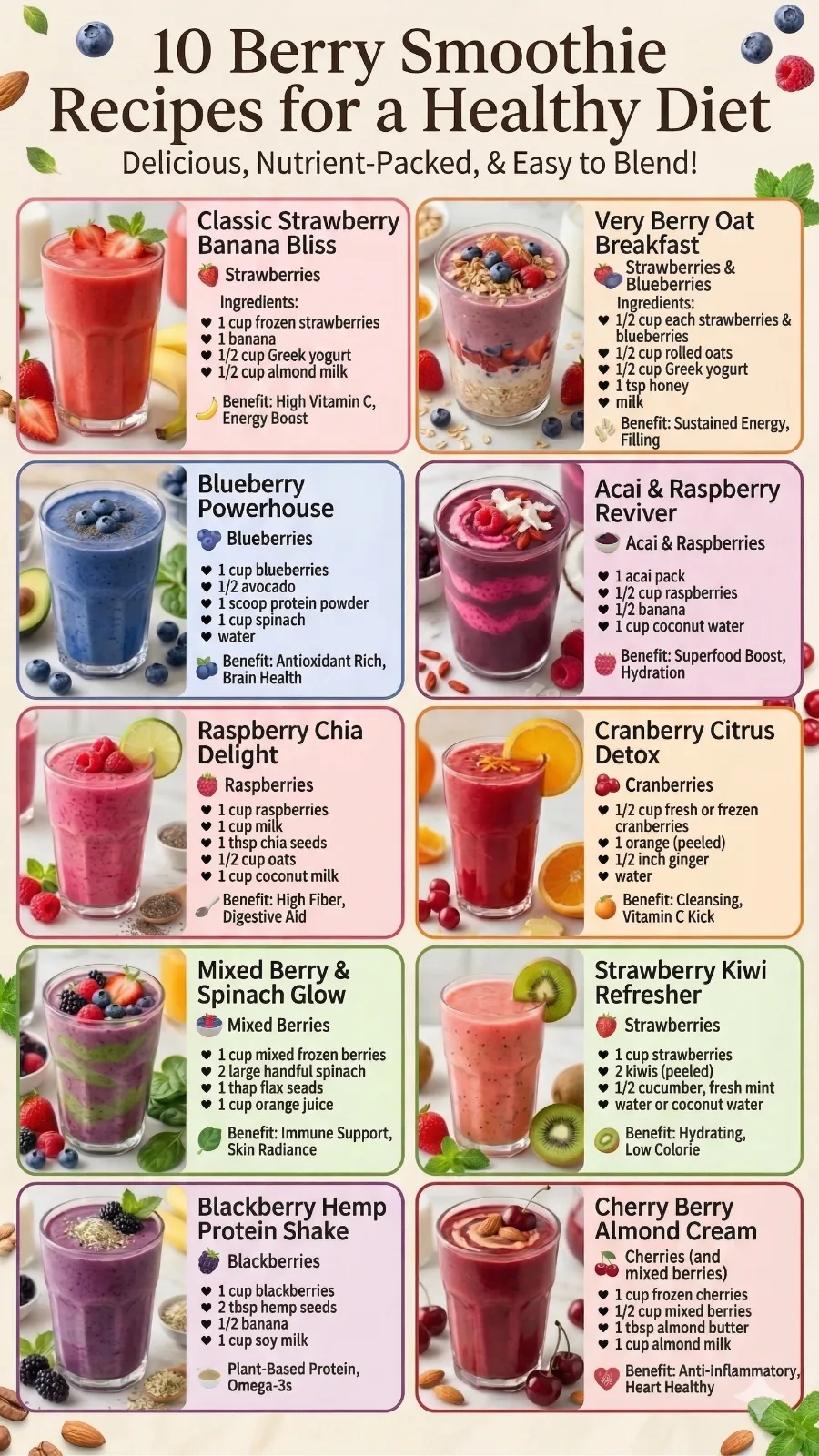
Mixed Berry & Spinach Glow
Nutritional Deep Dive & Health Benefits
Let's go deeper into why this combination is so powerful. The mixed berries—whether you use strawberries, blueberries, raspberries, or blackberries—are rich in polyphenols, particularly anthocyanins, which give them their deep red, purple, and blue hues. These compounds have been studied for their role in reducing oxidative stress, which is linked to aging and chronic diseases. Vitamin C in berries also supports the production of white blood cells, your body's first line of defense against infections. A single cup of mixed berries can provide over 50% of your daily vitamin C needs, making this smoothie a smart choice during cold and flu season.
Spinach might seem like a humble green, but it's a nutritional powerhouse. It's an excellent source of vitamin K1, which is crucial for bone health and proper blood clotting. It also provides vitamin A in the form of beta-carotene, which your body converts as needed—important for vision, immune function, and skin repair. Folate (vitamin B9) in spinach supports cell division and DNA synthesis, making it especially important for women of childbearing age. Additionally, spinach contains lutein and zeaxanthin, two carotenoids that accumulate in the retina and help protect against age-related macular degeneration.
Flax seeds are tiny but mighty. They deliver alpha-linolenic acid (ALA), a plant-based omega-3 fatty acid that supports heart health by reducing inflammation and helping to lower blood pressure. The fiber in flax—both soluble and insoluble—feeds beneficial gut bacteria, promotes regularity, and can help lower cholesterol levels. Lignans, another compound in flax, have antioxidant and estrogen-balancing properties. Just one tablespoon provides a good chunk of your daily omega-3s and fiber.
Orange juice is more than just a sweet base. It's famous for vitamin C, but it also contains potassium, which helps regulate blood pressure and muscle function. The vitamin C in orange juice significantly enhances the absorption of iron from the spinach. Plant-based iron (non-heme) is harder for the body to absorb, but pairing it with vitamin C can boost absorption by up to six times. This synergy is one of the reasons this smoothie is so well-designed.
When you drink this smoothie, you're getting a broad spectrum of vitamins (A, C, E, K, and several B vitamins), minerals (iron, calcium, magnesium, potassium), fiber, healthy fats, and antioxidants. It supports immune function, skin health, digestion, heart health, and even eye health. It's a true multi-tasker.
Ingredients
- 1 cup mixed frozen berries
- 2 large handfuls spinach
- 1 tbsp flax seeds
- 1 cup orange juice
Instructions
- Add 1 cup mixed frozen berries to the blender.
- Add 2 large handfuls of spinach.
- Add 1 tbsp flax seeds.
- Pour in 1 cup orange juice.
- Blend well until smooth.
- Serve fresh for immune support and skin radiance.
Expert Blending Techniques & Equipment Guide
Getting a perfectly smooth smoothie isn't just about throwing everything in and hoping for the best. The order you add ingredients matters. Always put liquids in first, then soft ingredients like spinach, then frozen fruit, and finally seeds or powders. This prevents the blades from getting stuck and ensures even blending. If you have a high-powered blender like a Vitamix or Blendtec, you can pretty much add everything at once, but for standard blenders, layering is key.
Start on low speed and gradually increase to high. This pulls the ingredients down into the blades rather than splashing them up the sides. If your blender has a tamper, use it to push things down while blending. If not, stop and scrape down the sides with a spatula as needed. Blend for at least 60 seconds on high to get a truly silky texture. For an even smoother result, especially if you're using a standard blender, you can blend the spinach and orange juice first until no leafy bits remain, then add the berries and flax and blend again.
If you prefer a thinner smoothie, add more liquid a quarter cup at a time. For a thicker, spoonable consistency, use less liquid or add more frozen fruit. If you don't have a high-speed blender, soaking the flax seeds beforehand isn't necessary, but you can grind them in a coffee grinder for a smoother texture. Whole flax seeds may pass through undigested, so grinding them helps you absorb more nutrients.
Equipment-wise, a good blender is your best friend. If you're in the market, look for one with at least 600 watts for smooth results. Personal blenders like NutriBullet are convenient for single servings, but they may struggle with large handfuls of spinach. In that case, blend the spinach with the liquid first, then add the rest. Always remember to secure the lid tightly and start on a low setting to avoid a smoothie explosion.
Storage, Meal Prep & Serving Suggestions
This smoothie is best enjoyed fresh, but life gets busy. If you need to make it ahead, pour it into a mason jar, fill it to the brim to minimize air exposure, and seal tightly. It will keep in the fridge for up to 24 hours. Before drinking, shake well—separation is natural. You can also freeze the smoothie in ice cube trays and re-blend later with a splash of liquid for a quick single-serving option. Frozen smoothie cubes last up to three months.
For meal prep, create smoothie kits. Grab small freezer bags and add the berries, spinach, and flax seeds. Label with the date and contents. When you're ready, empty one bag into the blender, add orange juice, and blend. This cuts morning prep to under a minute. You can also prep a week's worth of kits on Sunday for grab-and-go breakfasts.
Serving suggestions: Pour into a chilled glass and top with a few fresh berries, a sprinkle of chia seeds, or a dollop of coconut yogurt. For a smoothie bowl, reduce the liquid to 1/2 cup, blend thick, and top with granola, sliced banana, and nut butter. It's also a great post-workout recovery drink—add a scoop of protein powder if you like. For kids, serve in a fun cup with a straw and call it a "purple monster smoothie." They'll never guess it has spinach.
You can also turn this smoothie into popsicles for a refreshing summer treat. Pour the blended mixture into popsicle molds and freeze for at least 4 hours. They're a hit with both kids and adults.
Additional Frequently Asked Questions
Can I drink this smoothie every day?
Yes, you can enjoy it daily as part of a balanced diet. However, variety is key to getting a wide range of nutrients. You might rotate it with other smoothie recipes throughout the week. Also, if you're on blood-thinning medication, consult your doctor about consistent spinach intake due to its vitamin K content.
What if I don't have flax seeds?
You can substitute with chia seeds, hemp hearts, or pumpkin seeds. Chia seeds will thicken the smoothie and add omega-3s, while hemp hearts add protein. If you use chia, let the smoothie sit for 5 minutes to allow them to gel slightly for a thicker texture.
Is this smoothie safe for kids?
Absolutely, and it's a great way to sneak greens into their diet. The sweetness from the berries and orange juice usually masks the spinach. For younger kids, you might start with less spinach (one handful) and gradually increase. Also, be mindful of choking hazards—blend until completely smooth.
Can I add protein powder?
Yes, a scoop of vanilla or unflavored protein powder makes it a more substantial meal replacement or post-workout shake. Plant-based proteins like pea or hemp pair well. If you use flavored protein, you might not need any additional sweetener.
Why does my smoothie separate?
Separation is natural because there are no stabilizers or gums. Simply shake or stir before drinking. If you want a more stable smoothie, add a tablespoon of chia seeds or a quarter of an avocado, which act as natural emulsifiers.
Can I use spinach that's not baby spinach?
Yes, regular spinach works fine, but it has a slightly stronger, earthier flavor. If you're sensitive to the taste, baby spinach is milder. You can also blanch regular spinach quickly and then freeze it in portions to mellow the flavor.
How can I make it creamier without dairy?
Add half an avocado, a frozen banana, or a spoonful of almond butter. Coconut milk (canned) also adds richness. These additions boost healthy fats and make the texture more luxurious.
Is it okay to use bottled orange juice?
Yes, but fresh-squeezed is best for flavor and nutrients. If using bottled, choose 100% juice with no added sugar. You can also use whole oranges—peel and blend them with the other ingredients for extra fiber.