Raspberry Almond Cream Dream
Expert Blending Techniques & Equipment Guide
Getting that perfect silky texture isn't just about throwing everything in and hoping for the best. Over the years, I've learned a few tricks that make a real difference. First, always add your liquid ingredients to the blender first—the milk and yogurt go in before the raspberries and almonds. This creates a vortex that pulls the solids down into the blades, preventing those frustrating air pockets that leave chunks of unblended almonds floating on top. Second, if you're using whole almonds, start with a quick pulse session before adding the rest of the ingredients. Give them five or six short bursts to break them down into a coarse meal. This ensures you don't end up with gritty bits in an otherwise creamy smoothie.
Your blender matters more than you might think. A high-powered machine like a Vitamix, Blendtec, or Ninja will pulverize whole almonds into a smooth, velvety consistency in under a minute. If you're working with a standard countertop blender, you'll want to blend longer—sometimes up to two full minutes—and scrape down the sides halfway through. For those with personal-sized blenders like a NutriBullet, you may need to shake the cup a few times to keep things moving. And if your blender is on the weaker side, don't fight it—just use almond butter instead of whole almonds. The flavor is identical and the texture is flawless.
Temperature control is another secret. If you're using fresh raspberries and want that thick, frosty consistency without watering down the flavor, freeze your yogurt into ice cube trays the night before. Pop a few yogurt cubes in along with the fresh berries, and you'll get a luxuriously thick smoothie that stays cold without any dilution. This trick also works with leftover smoothie—pour it into ice cube trays and re-blend later for an instant frozen treat.
Finally, don't over-blend. Once everything is smooth, stop. Blending for too long introduces air and heat, which can make your smoothie thin and foamy. A good rule of thumb is to blend on high for 45 to 60 seconds, then check the consistency. If it's perfect, pour and enjoy. If it needs a little more time, give it another 15 seconds and check again.
Ingredients
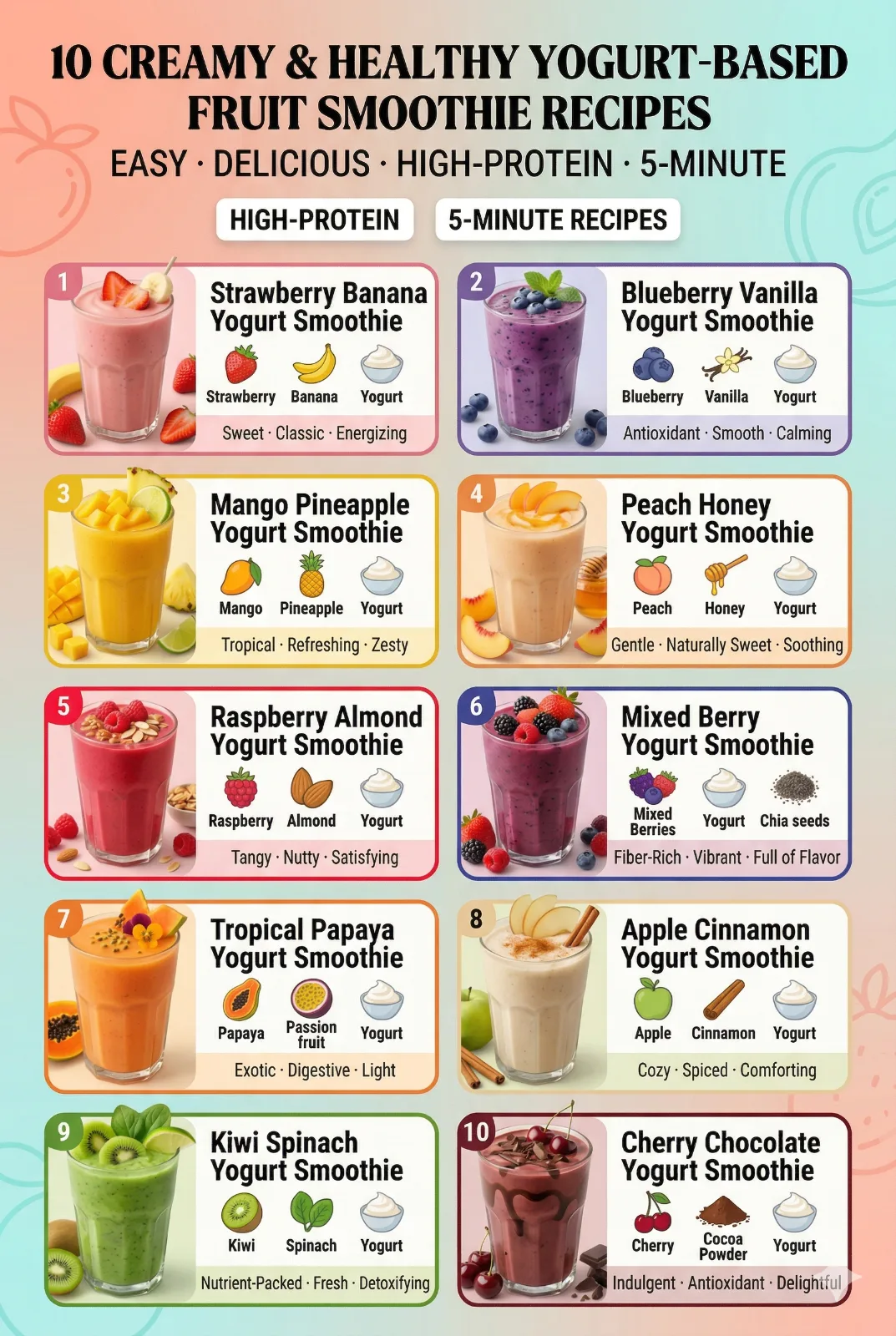
- 1 cup fresh or frozen raspberries
- 1/4 cup raw almonds (or 2 tbsp almond butter)
- 1 cup plain Greek yogurt (or dairy-free yogurt)
- 1/2 cup milk of choice (almond milk works great)
- 1 tbsp honey or maple syrup (optional, to taste)
- 1/2 tsp vanilla extract (optional)
- Ice cubes (if using fresh berries)
Instructions
- Add raspberries, almonds, yogurt, milk, honey (if using), and vanilla to a blender.
- If using fresh berries, add a handful of ice cubes.
- Blend on high for 30-60 seconds until completely smooth and creamy.
- Taste and adjust sweetness if needed.
- Pour into glasses and serve chilled. Enjoy immediately.
Storage, Meal Prep & Serving Suggestions
One of the reasons I make this Raspberry Almond Yogurt Smoothie so often is that it fits seamlessly into a busy schedule. You can do almost all the prep work ahead of time, which means breakfast is ready in under two minutes on a hectic morning. My favorite approach is to build smoothie packs. Grab a few small freezer-safe bags or containers, and in each one combine a cup of frozen raspberries, a quarter cup of almonds, and a tablespoon of your preferred sweetener if you're using one. Seal them up and store them in the freezer for up to three months. When you're ready to blend, just dump the contents of one pack into your blender, add the yogurt and milk, and blitz. No measuring, no thinking, no excuses to skip breakfast.
If you prefer to prep the entire smoothie in advance, you can blend a big batch and store it in airtight mason jars. Fill the jars all the way to the top to minimize the air exposure, which is what causes oxidation and color changes. Stored this way, the smoothie will keep in the fridge for up to 24 hours. Just give it a good shake or stir before drinking, because natural separation will occur. The color might dull slightly, but the flavor and nutrition remain intact. For longer storage, pour the blended smoothie into ice cube trays and freeze. Once frozen, transfer the cubes to a freezer bag. When you want a single serving, blend a handful of cubes with a splash of milk until smooth.
Serving suggestions? This smoothie is a complete breakfast on its own, but I also love it as a post-workout recovery drink, an afternoon snack, or even a light dessert. For a fancy presentation, pour it into a chilled glass, top with a few fresh raspberries, a sprinkle of sliced almonds, and a tiny drizzle of honey. It looks like something you'd pay ten dollars for at a trendy cafe, but it takes just minutes to make at home. You can also pour it into popsicle molds for a healthy frozen treat that kids adore. My niece and nephew call them "pink pops" and have no idea they're eating something packed with protein and fiber.
Additional Frequently Asked Questions
Can I use a different type of berry in this smoothie?
Absolutely! While raspberries give this smoothie its signature tangy flavor and vibrant pink color, you can swap them for strawberries, blackberries, or a mixed berry blend. Strawberries will make it sweeter and slightly less tart, while blackberries add a deeper, more complex flavor. Just keep the proportions the same—about one cup of berries per serving. If you use a sweeter berry, you might not need any added sweetener at all.
How much protein is in this Raspberry Almond Yogurt Smoothie?
The protein content depends on the type of yogurt you use. A cup of plain Greek yogurt typically provides around 20 grams of protein, while regular yogurt has about 12 grams. Almonds add another 6 grams per quarter cup. So with Greek yogurt and whole almonds, you're looking at roughly 26 grams of protein per serving. That's comparable to a chicken breast and makes this smoothie an excellent choice for muscle recovery after a workout.
Is this smoothie suitable for people with lactose intolerance or dairy allergies?
Yes, with a simple swap. Use a dairy-free yogurt alternative made from coconut, almond, soy, or oat milk. Just be sure to choose an unsweetened variety to keep the sugar content in check. Also, double-check that your milk of choice is dairy-free—almond milk, oat milk, and coconut milk all work beautifully. With these substitutions, the smoothie becomes completely dairy-free while still delivering that creamy texture and tangy flavor.
Can I add vegetables to this smoothie without ruining the flavor?
You bet! This is one of my favorite ways to sneak extra nutrients into my day. A handful of fresh spinach or baby kale blends right in and you won't taste it at all—the raspberry flavor is strong enough to mask any earthy notes. Cauliflower rice is another stealthy addition; it adds creaminess and fiber without changing the taste. I've even added a small piece of cooked beet for an extra vibrant pink color and a boost of nitrates, which are great for circulation. Start with a small amount and increase gradually as your taste buds adjust.
What's the best milk to use for this smoothie?
It really comes down to personal preference and dietary needs. Unsweetened almond milk is my top pick because it complements the almond flavor and keeps the smoothie light. Oat milk adds a naturally sweet, creamy quality that's hard to beat. Coconut milk (the carton kind, not the canned) gives a subtle tropical twist. Regular dairy milk works perfectly too, adding extra protein and calcium. Whatever you choose, unsweetened varieties give you the most control over the sweetness and overall flavor.