Summer Peach Dream Smoothie
Expert Blending Techniques & Equipment Guide
Getting that perfect creamy texture isn't just about the ingredients—it's also about how you blend. Over the years, I've learned a few tricks that make a world of difference. First, always add your liquids to the blender first. That means pouring in the orange juice before the frozen peaches and Greek yogurt. This simple step helps the blades move freely and prevents air pockets from forming, which can leave unblended chunks. Next, add the Greek yogurt and honey, and then pile the frozen peaches on top. The weight of the peaches will push everything down as the blender runs, ensuring an even blend.
If you're using a high-powered blender like a Vitamix or Blendtec, you can pretty much toss everything in and hit the smoothie setting. But if you have a standard blender, you'll want to start on low speed and gradually increase to high. This gives the frozen fruit time to break down without straining the motor. You might need to stop and scrape down the sides once or twice, especially if your peaches are particularly large. A tamper tool is handy here—it lets you push the fruit into the blades without stopping the machine.
Another pro tip: don't over-blend. Once the smoothie is smooth and creamy, stop. Over-blending can warm the mixture and thin it out, and it also incorporates more air, which can make it foamy. Aim for 30 to 60 seconds of blending after everything is incorporated. If you prefer a thinner consistency, add a splash more orange juice, but do so a tablespoon at a time. And if you want it thicker, toss in a few extra frozen peach slices or a frozen banana chunk.
As for equipment, a good blender is your best friend here. If you're in the market for one, look for a model with a powerful motor (at least 1000 watts) and sturdy blades. A personal blender, like a NutriBullet, works in a pinch, but you may need to shake it a few times to get everything moving. Whatever you use, make sure it's clean and dry before you start—residual odors from last night's garlicky pasta sauce can ruin a delicate fruit smoothie. A quick rinse with hot water and a drop of dish soap, followed by a thorough dry, will keep your smoothie tasting fresh.
Ingredients
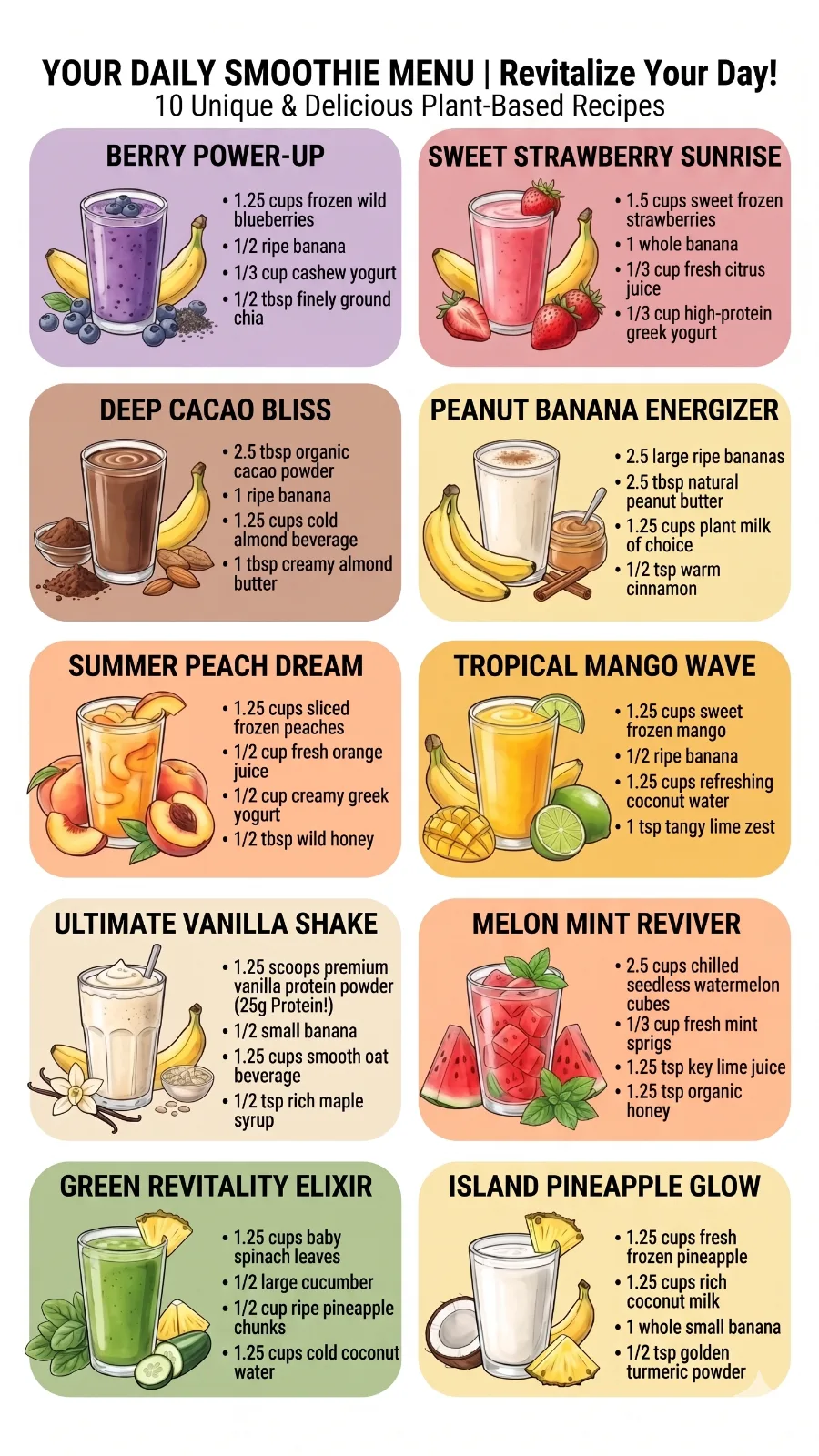
- 1.25 cups sliced frozen peaches
- 1/2 cup fresh orange juice
- 1/2 cup creamy Greek yogurt
- 1/2 tbsp wild honey
Instructions
- Place frozen peaches, orange juice, Greek yogurt, and wild honey in a blender.
- Blend until smooth and creamy.
- Pour into a glass and enjoy a refreshing summertime treat.
Storage, Meal Prep & Serving Suggestions
One of the reasons I love this Summer Peach Dream smoothie is that it's incredibly meal-prep friendly. Life gets busy, and having a nutritious breakfast or snack ready to go is a game-changer. Here's how to make it work for you.
For meal prep, I like to portion out the frozen peaches and orange juice into individual freezer bags or containers. I'll label them with the date and contents, then stack them in the freezer. When I'm ready to blend, I just dump the frozen mixture into the blender, add the Greek yogurt and honey, and blend. It takes less than two minutes, and there's no measuring involved. These pre-portioned bags will keep in the freezer for up to three months, so you can make a big batch and enjoy them all summer long.
If you prefer to blend ahead, you can store the finished smoothie in an airtight container in the refrigerator for up to 24 hours. Just give it a good stir or shake before drinking, as natural separation will occur. For longer storage, pour the smoothie into ice cube trays and freeze. Once frozen, transfer the cubes to a freezer bag. When you want a smoothie, simply blend a handful of cubes with a splash of orange juice or milk. This method keeps the smoothie fresh for up to three months and is perfect for making single servings.
When it comes to serving, this smoothie is delightful on its own, but you can also dress it up. Pour it into a fancy glass, add a peach slice on the rim, and you've got a mocktail-worthy drink. For a more substantial meal, turn it into a smoothie bowl. Pour the smoothie into a bowl, then top with sliced fresh peaches, a sprinkle of granola, chia seeds, shredded coconut, or a drizzle of honey. The contrast of creamy and crunchy is irresistible. You can also serve it as a dessert—pour into popsicle molds and freeze for a healthy frozen treat that kids and adults alike will love.
Pairing suggestions? This smoothie goes well with a light breakfast like avocado toast or a veggie omelet. As a snack, it's satisfying on its own. And for a post-workout refresh, it's perfect because it provides carbs for energy and protein for muscle recovery. If you're hosting a brunch, set up a smoothie bar with different toppings and let guests customize their own. It's a fun, interactive way to enjoy this tropical delight.
Additional Frequently Asked Questions
Can I use canned peaches instead of frozen?
While fresh or frozen peaches are ideal, you can use canned peaches in a pinch. Look for peaches canned in their own juice or water, not heavy syrup, to keep the sugar content in check. Drain them well before adding to the blender. However, keep in mind that canned peaches are softer and may not give you that thick, frosty texture. To compensate, add a handful of ice cubes or a frozen banana. The flavor will still be delicious, just a bit different.
What type of Greek yogurt works best?
I recommend using plain, unsweetened Greek yogurt. It has a tangy flavor that balances the sweetness of the peaches and honey. You can use full-fat, low-fat, or nonfat, depending on your preference. Full-fat will give you the creamiest result, while nonfat is lighter. If you only have regular yogurt, you can use it, but the smoothie will be thinner. To thicken regular yogurt, strain it through a cheesecloth for a few hours to remove excess whey—this mimics the consistency of Greek yogurt.
Is this smoothie suitable for kids?
Absolutely! Kids love the sweet, fruity flavor. However, honey is not recommended for infants under one year old due to the risk of botulism. For young children, you can omit the honey or substitute with a mashed banana or a date. Also, you might want to serve it in a sippy cup or with a straw to avoid spills. It's a great way to sneak in some fruit and protein for picky eaters.
How can I make this smoothie lower in sugar?
To reduce the sugar content, you can omit the honey altogether, especially if your peaches are very ripe and sweet. You can also use fewer peaches and add more ice or unsweetened almond milk. Another option is to use a sugar-free sweetener like stevia or monk fruit, though I prefer natural sources. Keep in mind that the orange juice also contains natural sugars, so you could swap it for unsweetened almond milk or water for a lower-sugar version. The Greek yogurt adds protein, which helps balance blood sugar levels.
Can I add other fruits to this smoothie?
Of course! This recipe is very forgiving. Try adding a handful of frozen mango, pineapple, or strawberries for a different twist. A frozen banana will make it creamier and add potassium. If you want a green smoothie, toss in a cup of fresh spinach or kale—you won't taste it, but you'll get extra nutrients. Just be mindful that adding more fruit will increase the natural sugar content. Adjust the liquid accordingly to reach your desired consistency.