Creamy Green Avocado Apple Smoothie
Nutritional Deep Dive & Health Benefits
Let's talk about what's actually in the glass, because this Avocado Spinach Apple Smoothie is quietly one of the most nutrient-dense things you can make in five minutes.
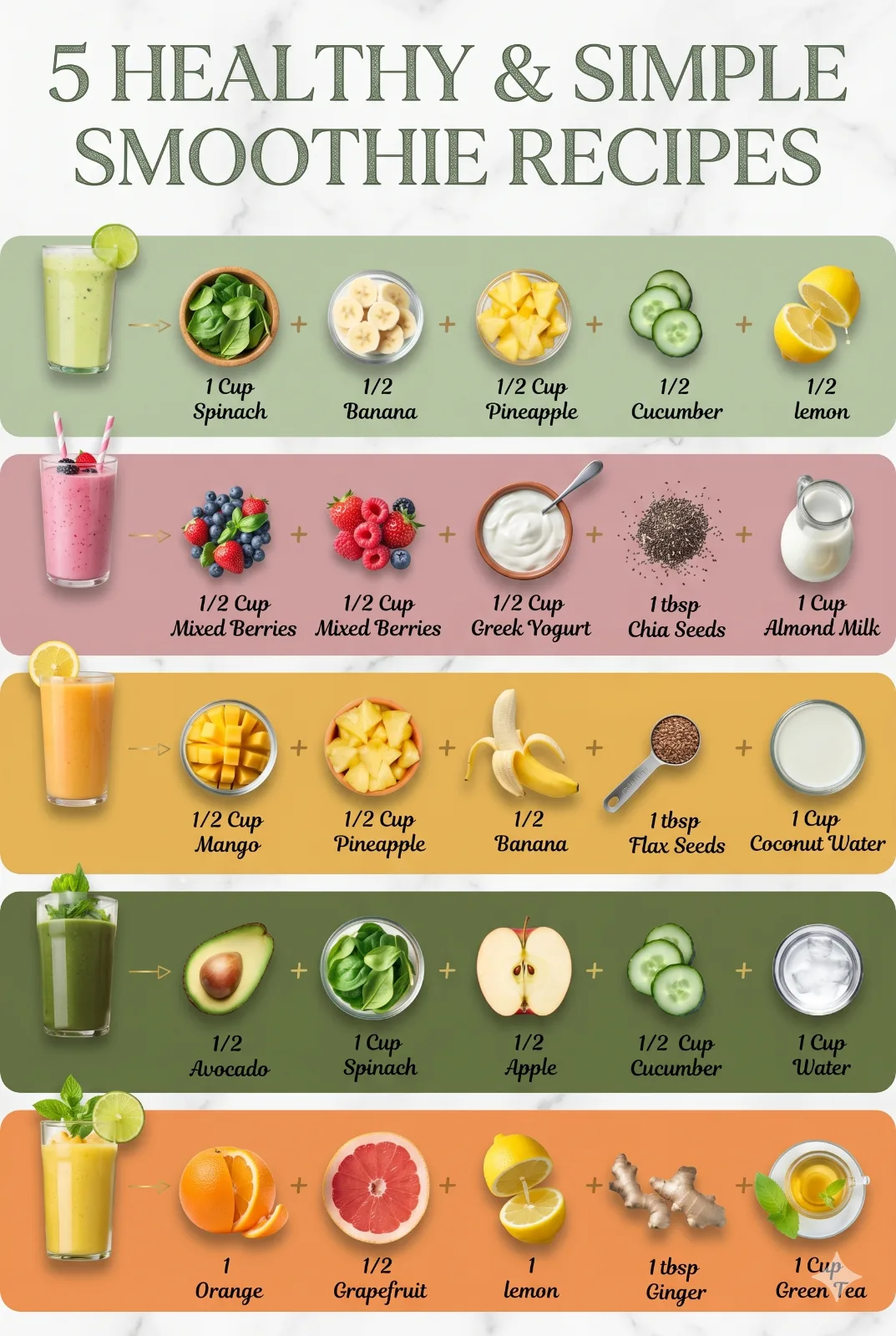
**Avocado** is the star of the show, and for good reason. Half a medium avocado delivers roughly 160 calories, 15 grams of fat (mostly heart-friendly monounsaturated fat, the same kind found in olive oil), about 7 grams of fiber, and a solid dose of potassium — more per gram than a banana, which surprises most people. That fat content matters here for a practical reason: fat-soluble vitamins like A, D, E, and K need fat to be absorbed properly. When you blend spinach into a smoothie without any fat, you're absorbing far less of its vitamin K and beta-carotene than you think. The avocado fixes that. It's a genuinely smart pairing, not just a trendy one.
**Spinach** brings the micronutrient fireworks. One cup of raw spinach is low in calories but loaded with vitamin K, vitamin A (as beta-carotene), folate, iron, and a decent hit of vitamin C. It also contains plant compounds like lutein and zeaxanthin, which are associated with eye health. Because spinach is a dark leafy green, it's one of the more concentrated sources of these nutrients per bite — which is exactly why it earns its place in a dark green smoothie base.
**Apple** contributes pectin, a soluble fiber that feeds beneficial gut bacteria and helps slow the absorption of sugars, keeping your blood sugar steadier than a fruit-juice-based smoothie would. Apples also supply quercetin, an antioxidant concentrated in the skin. Half an apple won't transform your diet, but it's doing more work than most people give it credit for.
**Cucumber** is 95% water, which is why this smoothie feels so hydrating. It also adds silica and small amounts of vitamin K and potassium, plus a clean, almost melon-like flavor that keeps the drink from tasting too heavy.
**Water** as the liquid base is a deliberate choice. Many green smoothie recipes call for juice, coconut water, or milk, all of which add sugar or calories. Plain water lets the ingredients speak for themselves and keeps the final color in that pretty light green-to-white range instead of turning murky. If you want a white smoothie effect, swap in unsweetened coconut milk or a scoop of Greek yogurt — you'll get a creamier, paler result with a bit more protein.
Put it all together and you're looking at roughly 200–220 calories, 8–9 grams of fiber, 3–4 grams of protein, and a serious spread of vitamins A, C, E, K, folate, and potassium. That's a genuinely balanced drink — fiber, fat, and micronutrients in one glass.
Ingredients
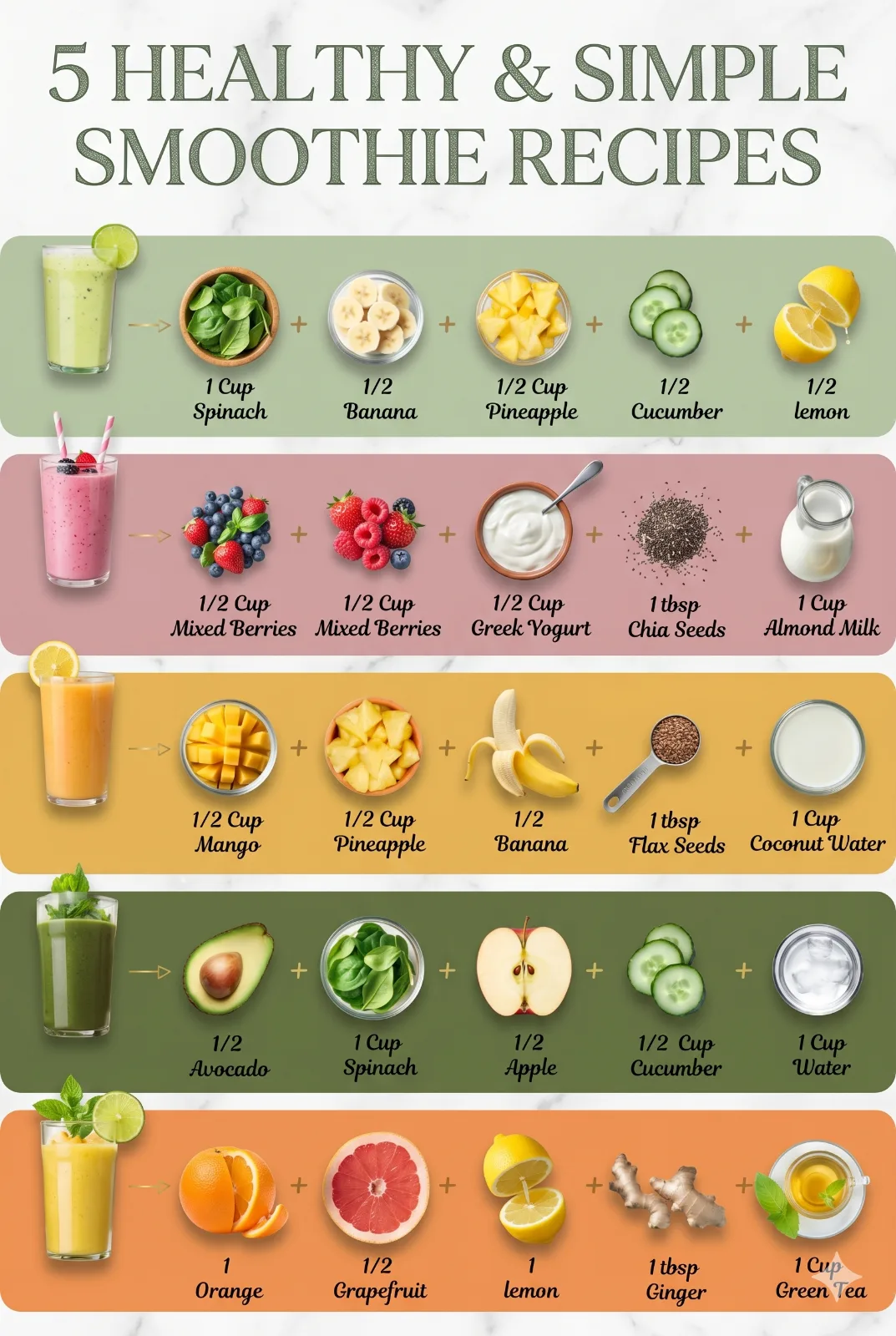
- 1/2 avocado
- 1 cup fresh spinach
- 1/2 apple, sliced
- 1/2 cup cucumber slices
- 1 cup water
Instructions
- Add 1/2 avocado to the blender.
- Add 1 cup spinach.
- Add 1/2 apple, sliced.
- Add 1/2 cup cucumber slices.
- Pour in 1 cup water.
- Blend until smooth and creamy.
- Serve chilled.
Expert Blending Techniques & Equipment Guide
Here's the thing nobody tells you about green smoothies: the order you add ingredients actually matters.
**Layer your blender correctly.** Always put the liquid in first — the water goes at the bottom, closest to the blades. Then add the soft ingredients (avocado, cucumber), then the leafy greens (spinach), and finally the firm items (apple slices) on top. This creates a vortex as the blades spin and pulls everything down evenly, rather than leaving spinach leaves stuck to the sides while the apple chunks bounce around at the bottom.
**Blend in stages if your blender is struggling.** Start on low for 15–20 seconds to break everything up, then crank it to high for 45–60 seconds until the texture turns completely uniform. If you see flecks of spinach or apple skin clinging to the sides, stop, scrape down with a spatula, and blend again. A truly smooth green smoothie should have zero grit.
**Equipment matters more than you'd think.** A high-powered blender (Vitamix, Blendtec, or a comparable 1000-watt-plus model) will turn this into silk in under a minute. A standard blender works too, but you may need to add an extra splash of water and blend longer. If you're working with a small personal blender, cut the apple and cucumber into smaller pieces and blend in two batches — overfilling a weak blender is the number one cause of chunky smoothies.
**Don't over-blend.** Once it's smooth, stop. Running a blender for three or four minutes whips air into the mixture, and an aerated smoothie separates faster and tastes slightly foamier. Sixty to ninety seconds is the sweet spot for most machines.
**Serve it cold, in a chilled glass.** This is a small touch that makes a real difference. Pop your glasses in the freezer for five minutes while you blend, or rinse them with cold water first. The smoothie itself should be cold from cold ingredients — if you're using room-temperature produce, add three or four ice cubes and blend them in rather than watering the drink down.
Storage, Meal Prep & Serving Suggestions
This is a smoothie that rewards drinking fresh, but with a little planning you can absolutely work it into a busy week.
**Short-term storage.** Pour any leftovers into a glass jar with a tight-fitting lid and fill it all the way to the brim — minimal headspace means minimal oxygen, which means slower browning. It'll hold in the fridge for about 24 hours. Expect the color to shift slightly toward a paler, softer green or a faint beige; that's normal oxidation, not spoilage. Give it a vigorous shake before drinking, because the avocado solids will settle.
**Freezer smoothie packs.** This is my favorite hack. Portion the avocado, spinach, apple, and cucumber into freezer bags or mason jars, seal, and freeze for up to three months. In the morning, dump the contents into the blender, add your cup of water, and blend. The frozen fruit and veg give you an automatically icy, thick smoothie without any dilution. Just note that frozen avocado darkens slightly — the flavor is unaffected.
**Serving suggestions.** This smoothie shines as a standalone breakfast, but it also works beautifully alongside a piece of whole-grain toast with nut butter, or as a lighter afternoon pick-me-up. If you're serving it to kids or skeptics, pour it into a fun glass, add a straw, and top with a few apple slices or a sprinkle of chia seeds — presentation genuinely changes how people perceive a green drink.
**Pairing ideas.** A handful of granola on top turns it into a smoothie bowl situation. A drizzle of honey or a few drops of vanilla extract rounds out the flavor if you find it too grassy. And if you're making it post-workout, a scoop of vanilla or unflavored protein powder blends in seamlessly without changing the color much.
Additional Frequently Asked Questions
Can I use frozen spinach instead of fresh?
Absolutely. Frozen spinach is actually nutritionally comparable to fresh — sometimes even better, since it's blanched and frozen shortly after harvest, locking in vitamins. Use about half a cup of frozen spinach in place of the full cup of fresh, since it's more densely packed. It'll also make your smoothie colder and thicker, which is a bonus.
Is this smoothie safe to drink every day?
For most people, yes. It's a whole-food drink with no added sugar and nothing exotic. That said, if you're on blood-thinning medication like warfarin, keep an eye on your vitamin K intake from spinach, since consistency matters more than avoidance. And if you have any kidney concerns, talk to your doctor about leafy green consumption. For everyone else, daily is completely reasonable.
Can I make this without a high-powered blender?
Yes. Use a standard blender, but chop the apple and cucumber into small pieces first, add an extra two to three tablespoons of water, and blend in two shorter bursts with a scrape-down in between. If your blender really struggles, blend the spinach and water together first into a green liquid, then add everything else. That two-step method works surprisingly well on weaker machines.
What can I substitute for avocado?
If you're out of avocado or just not a fan, a frozen banana gives a similar creamy texture with more sweetness. Greek yogurt works too and pushes the color toward a white smoothie. Mango is another option if you want a fruitier, less green-leaning flavor. Just know that avocado is what makes this particular recipe unique — the swaps change the drink's character quite a bit.
Why does my smoothie separate after a few minutes?
That's just physics — water and solids naturally separate when left still. A quick stir or shake brings it right back together. If it's separating almost immediately, you likely didn't blend long enough. Give it another 30 seconds on high and it'll hold its emulsion much longer.