Apple Cinnamon Overnight Oats
Expert Blending Techniques & Equipment Guide
Now, you might be wondering why a smoothie website is talking about overnight oats. Well, this recipe is basically a smoothie in a bowl—creamy, spoonable, and packed with the same kind of blended goodness. But if you want to take it a step further and actually blend it into a drinkable smoothie, here's how to do it right.
First, the equipment. A high-speed blender like a Vitamix or Ninja is your best friend for achieving a silky texture. If you're working with a standard blender, don't worry—just soak your oats a bit longer (overnight is perfect) and blend in batches if needed. The key is to add the liquid first, then the solids, so everything moves freely.
For a true smoothie consistency, start with the overnight oat mixture as your base. Add an extra 1/4 cup of milk or a handful of ice cubes to thin it out. Blend on high for 30-45 seconds, then pause and scrape down the sides. Blend again until you see a vortex form—that's your sign it's perfectly smooth.
If you want to keep some texture, pulse instead of blending continuously. That way, you'll still get little flecks of apple and oat, which can be lovely. But if you're after a velvety, drinkable smoothie, keep blending until no chunks remain.
One pro tip: freeze your diced apple beforehand. Frozen apple blends into a frosty, milkshake-like treat without watering down the flavor. It also helps thicken the smoothie naturally. Just toss the diced apple pieces in a zip-top bag and freeze for at least 2 hours.
Another trick is to add a frozen banana for extra creaminess and natural sweetness. It pairs beautifully with cinnamon and apple. If you're avoiding bananas, a few tablespoons of frozen cauliflower rice or avocado can also add creaminess without altering the flavor too much.
When it comes to sweeteners, taste as you go. Blending can sometimes mute sweetness, so you might need an extra drizzle of honey or maple syrup. Start with a little and adjust.
Finally, don't forget the garnish. A sprinkle of cinnamon, a few thin apple slices, or a drizzle of nut butter on top makes your smoothie look as good as it tastes. And if you're serving it in a bowl, load it up with crunchy granola, chopped nuts, and fresh fruit for a satisfying breakfast bowl.
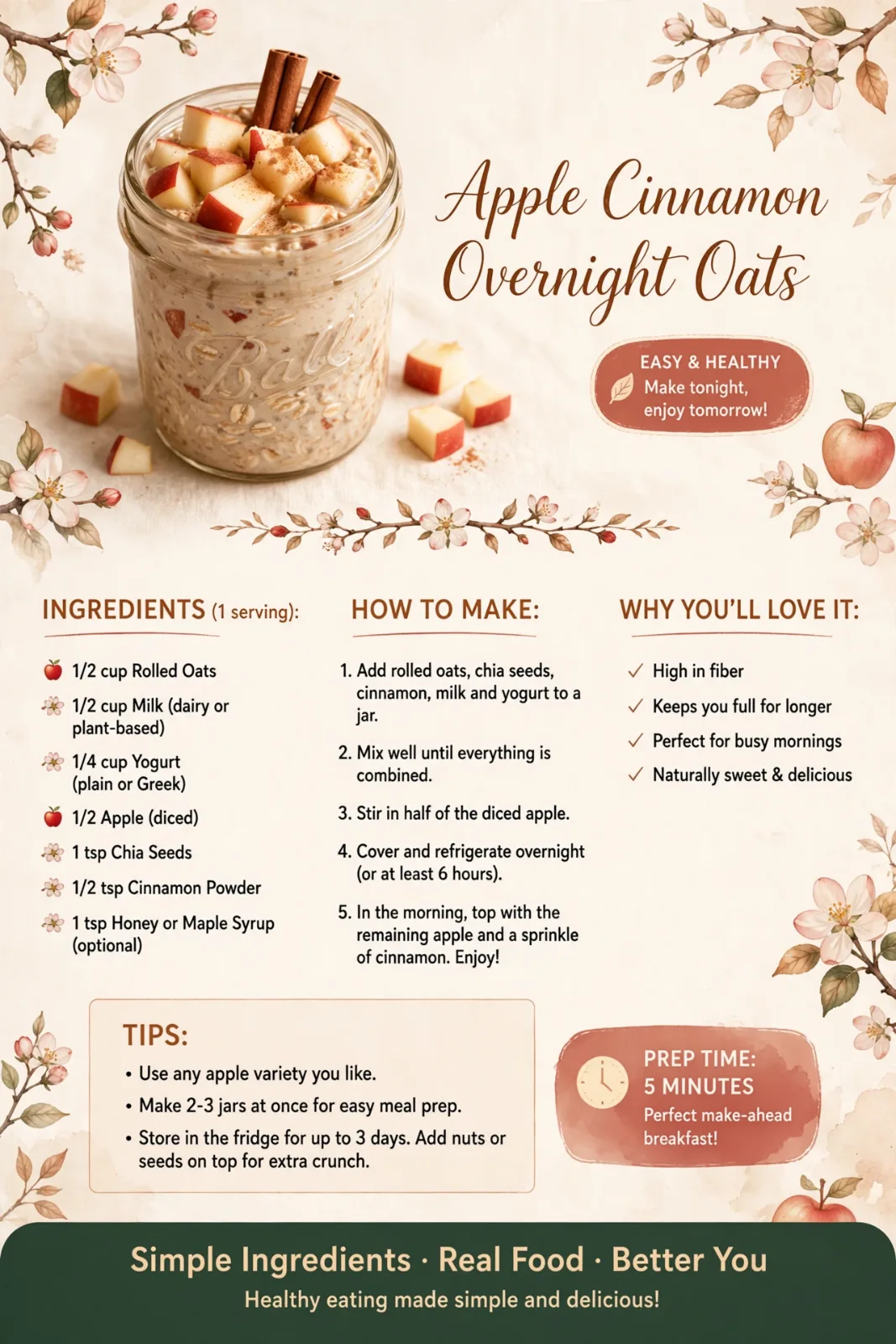
Ingredients
- 1/2 cup Rolled Oats
- 1/2 cup Milk (dairy or plant-based)
- 1/4 cup Yogurt (plain or Greek)
- 1/2 Apple (diced)
- 1 tsp Chia Seeds
- 1/2 tsp Cinnamon Powder
- 1 tsp Honey or Maple Syrup (optional)
Instructions
- Add rolled oats, chia seeds, cinnamon, milk and yogurt to a jar.
- Mix well until everything is combined.
- Stir in half of the diced apple.
- Cover and refrigerate overnight (or at least 6 hours).
- In the morning, top with the remaining apple and a sprinkle of cinnamon. Enjoy!
Storage, Meal Prep & Serving Suggestions
Overnight oats are the ultimate meal prep champion. You can make a big batch on Sunday and have breakfast ready for the next four days. Here's how to store and serve them like a pro.
First, choose the right containers. Wide-mouth mason jars are classic for a reason—they're easy to fill, stack neatly in the fridge, and look adorable. If you're taking them on the go, consider leak-proof containers with screw-on lids. Glass is best because it doesn't absorb odors or stain, but BPA-free plastic works too.
When portioning, leave about an inch of headspace at the top. The oats will expand slightly as they absorb liquid, and you don't want an overflow situation. If you're adding fresh apple on top, wait until just before eating to prevent browning. A squeeze of lemon juice on the diced apple can also slow oxidation if you must prep it ahead.
For longer storage, you can freeze overnight oats! Yes, really. Portion them into freezer-safe jars, leaving extra headspace, and freeze for up to 3 months. Thaw in the fridge overnight before eating. The texture will be slightly softer, but still delicious. This is perfect for busy weeks when you want grab-and-go breakfasts.
Serving suggestions? Oh, the possibilities. Enjoy it cold straight from the jar for a refreshing summer breakfast. Or warm it up for a cozy winter version—just microwave for 1-2 minutes, stir, and add a splash of milk. It turns into a creamy apple-cinnamon porridge that's pure comfort.
For a brunch-worthy presentation, layer the oats with yogurt and apple compote in a glass. Top with toasted pecans and a drizzle of caramel for a dessert-like treat. You can also serve it as a parfait with granola clusters for crunch.
If you're packing it for lunch, add a side of nut butter or a hard-boiled egg for extra protein. And don't forget a sprinkle of cinnamon right before eating—it wakes up the flavors.
Additional Frequently Asked Questions
Can I double or triple this recipe?
Absolutely! This recipe scales easily. Just multiply all ingredients by the number you need. Keep in mind that you might need a larger jar or multiple jars. The ratios stay the same, so it's foolproof.
What if I don't have yogurt?
You can skip the yogurt and increase the milk to 3/4 cup. The result will be a bit thinner but still tasty. Alternatively, use a dairy-free yogurt alternative like coconut or almond yogurt. If you want extra creaminess, add a tablespoon of nut butter.
How can I make this recipe nut-free?
Use a nut-free milk like oat, rice, or coconut milk (check that it's nut-free). Also, ensure your yogurt and any toppings are nut-free. Seeds like sunflower or pumpkin are great nut-free alternatives for crunch.
Can I use steel-cut oats?
Steel-cut oats don't soften well overnight—they remain too chewy. If you want to use them, you'll need to cook them first. Rolled oats or quick oats are the best choices for overnight oats.
Is this recipe good for weight loss?
It can be! Overnight oats are filling thanks to fiber and protein, which can help control appetite. Just watch your portions and sweeteners. Using Greek yogurt and skipping the honey can lower the sugar and calorie content. It's a satisfying, nutrient-dense breakfast that fits into many diets.
Can I add protein powder?
Yes, but add it in the morning or just before eating to avoid a chalky texture. Stir it in with a little extra milk. Vanilla or unflavored protein works best. You can also blend it in for a smoother consistency.
What other fruits can I add?
Berries, banana, pear, or even mango are great additions. Just keep in mind that softer fruits will break down more overnight. If you want them fresh, add them in the morning. Dried fruits like raisins or cranberries also work well—just reduce the sweetener.
How do I prevent the oats from being too mushy?
Use rolled oats, not quick oats, and don't over-stir. Also, don't add too much liquid. Start with the recommended amount and adjust in the morning. If they're too thick, add a splash of milk; if too thin, add a spoonful of chia seeds and let sit for 10 minutes.
Can I make this recipe without a refrigerator?
Overnight oats need refrigeration to safely soak and soften. If you don't have a fridge, you can use a cooler with ice packs, but it's best to make them when you have access to a fridge. Alternatively, you can cook oats on the stovetop for a warm version.
Are overnight oats safe to eat raw?
Yes, rolled oats are already steamed and rolled, so they're safe to eat without cooking. The soaking process makes them easier to digest. Just make sure to keep them refrigerated to prevent bacterial growth.